Last summer I got extremely into animating a handful of Neat Hobby! comics. It was the perfect distraction for someone like me: art, animation, video, music, and voice acting! I did the animation on my iPad using Clip Studio, the same program I use to draw comics and I wrote and recorded the music and all the voice acting in Garageband.
If you follow this site you've probably already seen one of these: I released "Yurēi-mazing" last Halloween. I had big plans to do about ten videos, but ran out of steam halfway through. I think once I figured it all out it just didn't hold my attention. Which is ridiculous because twelve-year-old me would've sold his Huffy bike and Micronauts collection for the chance make his own animated cartoons, something I can now do on a tablet while watching TV. It's not too late for twelve-year-old me to jump in a time machine and come kick my ass.
Here's the first animated Neat Hobby! from last summer: "Continuity." By the way, Neat Hobby! Newsletter subscribers not only saw this last summer, but also got to see behind-the-scenes stuff like animatics and proof-of-concept videos. You can too! If you join us!
In January I published some code that connects a Buttondown newsletter to Eleventy to create a Patreon-like "soft paywall" for your free and paying Buttondown subscribers and encourage more subscriptions. Now you can do the same for Wordpress, with this WP Buttondown plugin.
Eleventy is fantastic and still my current go-to for making websites, but ya gotta be pretty nerdy, love to write JavaScript, and know your way around a terminal. As of this year around 43% of websites are Wordpress sites, and the process for making plugins is well-documented, so it was sort of a no-brainer. Creating the plugin settings dashboard was the most complex part.
Connect your Buttondown newsletter to your Wordpress website and encourage subscriptions with subscribers-only content. - scottandrewlepera/wordpress-buttondown-plugin
GitHub
PS: there's a new version of the Eleventy/Buttondown code that adds the ability to put whole pages behind the subscribers-only gate. Eventually this will work its way into the Wordpress plugin, but I have other priorities.
The last few years have been, uh, notable for Big Tech layoffs and industry disruption. New grads are struggling to find jobs, and are now competing with freshly laid-off engineers with more experience but less flexibility. It sucks.
I don't have a ton of strategy to share and I'm not interested in Thought Leadership (deragatory). But I have spent over 20 years interviewing candidates at a big ol' FAANG company. I couldn't tell you anything about the hiring process you couldn't find yourself (pro tip: stalk subreddits), but I do have observations and opinions. So maybe I'll share them here in hopes it helps someone.
I posted the following short article to Medium in 2018 in response to a pattern I was seeing in interview loops. Candidates would generally do well, but when it came time for Q&A, they'd ask safe, deferential questions. It seemed like a squandered opportunity to engage with the interviewer as a peer.
I rewrote the article in 2023 with the intent to start a new tech-focused blog, but that didn't happen. I've had some follow-up thoughts in draft mode for years, so I might post those later.
“Do you have any questions for me before we wrap up?”
This your chance to make a lasting impression on your interviewer. It’s an opportunity to show your prospective employer you're interested in solving real problems, for real people. That you care about your work and the humans at the opposite end of the tech stack.
It’s also a chance to learn something about how your prospective employer operates. Maybe there’s a pain point you can help address, or a process gap you can help fill. Maybe you’ll see some patterns that indicate how happy — or miserable — you’ll be if you accept an offer.
Over two decades of interviewing candidates, the ones that stood out were the ones who tried to engage me in a conversation about things I cared about. Below are some conversation starters I jotted down from memory. Feel free to use them, and create your own.
What’s your worst day like here? How do you manage it?
If you could change one thing about your tech stack, what would it be? What’s blocking you from implementing this change?
What are some common pain points for your customers? Are you working towards solving them? Why or why not?
How do you respond to customer complaints? Do you have a system for customer-reported issues? How has that been working for you?
How does your team handle requests for new features? Do you have a process?
How do you evaluate new technology for use? What are your criteria for adoption?
I see from your [source code|press release|company blog] that you’ve adopted [a particular technology]. What decisions led you to that adoption? How successful has it been?
Tell me about your deployment methodology. Are you able to do continuous deployment? If so, how? If not, what is your release schedule like and what determines it?
How does your team handle code reviews? Do you have standards or criteria for reviews?
When was the last time your company or team had to migrate to a new tech stack? How did you approach this? Would you do anything differently now?
How do you handle professional growth? What does the typical developer career track look like at your company?
What’s the ratio of [engineering|product|project] managers to developers? Does this ratio work for you?
What’s one thing someone would need to know to be successful here?
How Core Git Developers Configure Git. Like a lot of folks I learned Git on the job and just the bare minimum to get the job done, so a lot of these cool options went undiscovered. I'm definitely adding a few of these things to my personal Git setup.
AI is Stifling Tech Adoption. All coding assistants have a starting prompt, and that prompt can be biased toward "proven" technologies like React and Tailwind.
Interop 2025 Dashboard. "Interop 2025 is a cross-browser effort to improve the interoperability of the web." Sucks to see my favored browsers lagging so far behind Chrome.
I'm glad I took the off-ramp from software engineering. I see a lot of echoes of my own career here. The industry changes fast and at some point you're competing with younger folks with more time, energy, and willingness to work for less money.
Grind 75. A curated list of 75 leetcode questions that cover basic tech interview patterns. I really don't get the continuing obsession with leetcode in a world of AI coding assistants and snapped-together cloud services.
The Visible Zorker. Game design legend Andrew Plotkin wrote an app that is a version of Zork that reveals the original Infocom source code *as you play the game.Which reminds me: the text adventure game I dreamed up when I was 14 and started rewriting in 2022 using Inform7 has been sitting around waiting for me to finish the last 10%. I should set a deadline and get that done!
I suspect that some firms believe AI allows them to get around the "cheap, fast, good — pick two" dilemma. Especially if the definition of "good" is "works well enough" and doesn't include secure and trustworthy.
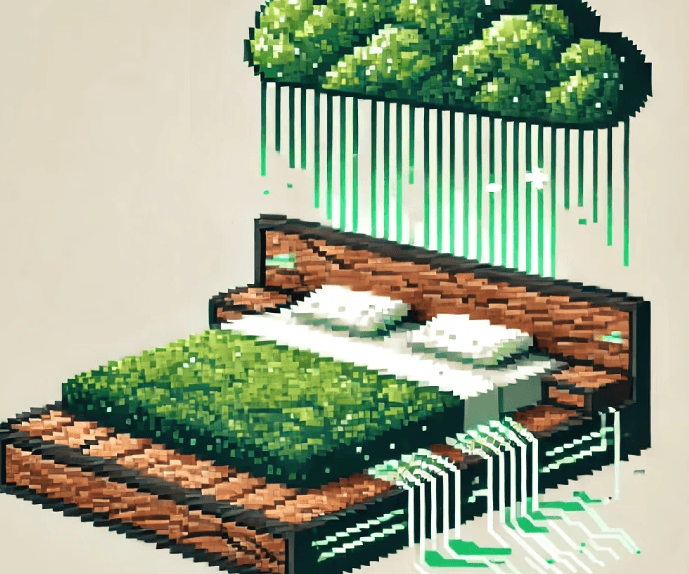
Leaving secret access keys out the open is a rookie mistake that should never make it through code review. Yet a security engineer found exactly that when they discovered their fancy high-tech bed was hackable.
I'm not saying the company in question used AI, because I can't possibly know that. But when I see reports like this, it makes me think: did a human review this? Did a human write this? What else is going unnoticed?
As AI empowers firms and inexperienced engineers to hastily slap together an app and rush it to market faster than ever, expect more hacks, data breaches, and other security woes.
Unlike the dry heat of the southwest US, Florida has a wet heat that moistens your skin, and scalp, and underarms, and the areas just beneath your eyesockets. Despite alleged alligator allocations, I didn't see a single alligator in the wild. So enjoy this captive alligator ass, whose owner seemed completely uninterested in any visitors, or turning around, or moving at all.
Back in 2016, I started working on HERETICAL, a short adventure comic. Then, as is the way of things, stuff happened, and as more stuff happened the comic fell lower and lower on my list of priorities. So it sat unfinished for a while—like, as two entire presidential administrations came and went. Then last year I found myself with a bit more free time than I am accustomed to and I basically finished it by grinding out one panel at a time.
As I once told the folks on my newsletter: I have to keep relearning the lesson: the world is always gonna be hot garbage in some way, whether we make art or not. So we may as well make art, and have a hot garbage world with art in it.
I hope you enjoy it! I've already gotten started on the next one. Just don't ask me how long it'll take!
(P.S.: the folks on my newsletter got to see HERETICAL a week ago, and also got to see sketches and process art all last year. If that sounds like your thing, you should subscribe )!
There's actually a LOT of subscriber-only content on Neat Hobby! — bonus comics, a hidden blog, etc. — but the only way to see it was to follow hidden links I only include in the newsletter. Those links are otherwise unprotected and that's fine, I don't mind if they get shared. But what I really wanted was something like what Ghost has, where hidden features and content can be unlocked for subscribers by just checking an email address.
And then something cool happened: Buttondown recently made their API free of charge. Kind of a big deal! Now I can use an edge function to call the API and check if an email is subscribed to the newsletter, then use the Eleveny Edge plugin to conditionally render content based on that check. No password required! Exactly the amount of friction I was aiming for.
Connect your Buttondown newsletter to your Eleventy website and encourage subscriptions with subscribers-only content. - GitHub - scottandrewlepera/netlify-buttondown-11ty: Connect your Buttondown…
If you're like me and create websites with the Eleventy static website generator, you know how cool it is!
You may have also been like me and excited to discover the Eleventy Edge plugin which allows you to create dynamic content on otherwise static websites!
You may have also been like me and disappointed to learn that the plugin was removed from the Eleventy 3.0 release and deprecated.
Unlike me, you may have started writing your own edge integrations, or decided to stick it out with v2.0, or maybe given up.
The layout reconfigures itself based on screen width. On mobile devices it'll be a single column layout with a dropdown menu. On laptops and wider screens it expands to a classic two-column layout.
See a live demo here and download a ZIP containing all of the template files. Feel free to use, modify, and share! And if you make something cool with it, let me know!
I've been loving the renewed interest in making websites a bit easier for people who have little desire to become web developers themselves.