A few years ago, frustrated with having tons of forgotten, unread browser tabs still open at the end of each week, I started using Pocket to save links for later reading.
The result? A ton of forgotten, unread links in my Pocket account. So in the interest of allieviating guilt and continuing the time-worn tradition of using blogs to share cool links, please enjoy "Pocket Lint."
A Conspiracy To Kill IE6: how early YouTube engineers influenced the tech world at large to scare users off of Internet Explorer 6.
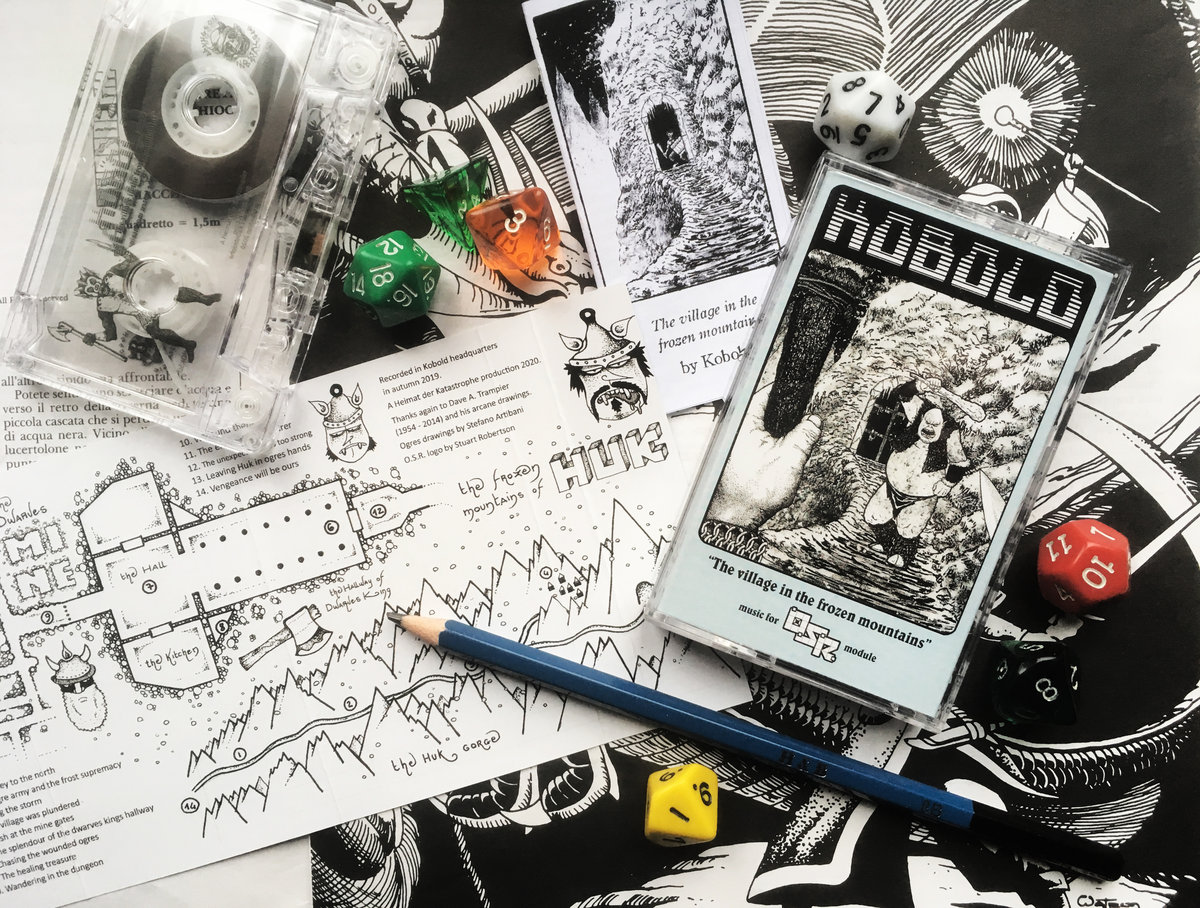
Heimat Der Katastrophe: this is astounding. Cassette-only ambient synth "dungeon drone" music, some of which come with a full D&D adventure printed on the cassette sleeve. Apparently these sell out in minutes.
Awhile back I had an idea to release some D&D-inspired instrumental music along with a printable PDF one-shot adventure. I thought I was so smart. But these…kind of raise the bar.
Other than I greatly enjoy the distraction it provides, I don't know why I keep tinkering with this website. But here I am, ripping it all down again. The previous posts about my static website generator project are now gone, and all my old Wordpress posts going back to 2008 are available again, although archived.
My interest in blogging ebbs and flows, but I feel compelled to maintain this site, the only piece of the web I can say I own.
I have assuredly broken a lot of links. Cool URIs don't change, but hey, I never said mine were cool.
So let's see what happens here this year, despite -- well, you know (gestures to everything).
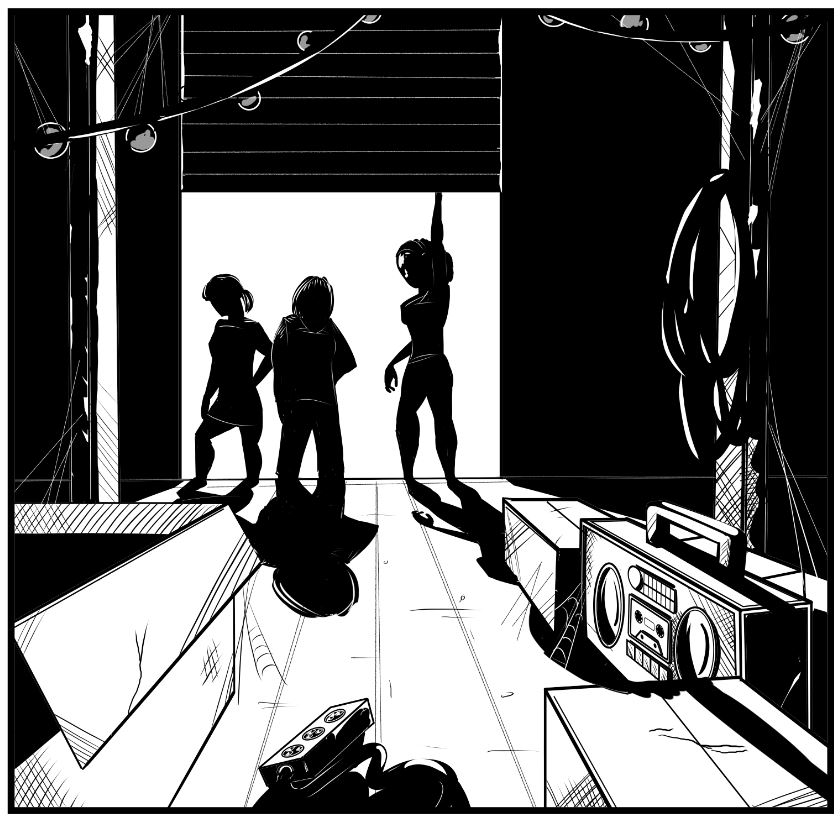
My Halloween horror story is now up. THE LAST REUNION SHOW is about three friends dealing with the consequences of getting everything they ever wanted. I first conceived the idea behind this story back in 2016, but didn't really start working on it in earnest until early 2019. I've spent most of the summer drawing and working on the visual effects, which I programmed myself. I plan to eventually release all the code behind the SFX, which... might make this the first one-shot horror comic to be accompanied by a Github repository?
THE LAST REUNION SHOW is a horror story for adults. You've been warned!
Relatable. I've been using React at the day job for about 9 months and have gone through a lot of similar growing pains. But despite the added friction, adding a build step to frontend work has been fantastic.
A well-defined UX pattern library combined with a component system like React is a formidable tool for solving problems that front-end devs have complained about for decades: consistency, testability, encapsulation of best practices, and generally keeping your front-end from degenerating into a hellscape of cut-and-paste code. I've found that devs that don't do front-end work can easily understand component systems and are a lot happier when they can build UIs out of Lego-like pieces.
Unfortunately, React is also great for throwing progressive enhancement out the window. Client-side rendering via JavaScript will never be as bulletproof as server-side and it irks me to no end when critical features of a site simply don't work at all if the JS engine fails. Please, forget the "people who surf with JS disabled" strawman and think about ad blockers, aggressive CDN caching and poorly-written 3rd party ad code full of bugs. Yes, React can be rendered server-side but that doesn't matter if you haven't done the work to make sure what's rendered is actually usable. /rant
I don't know what it is. But here's what's happening:
Neat Hobby! is currently on extended hiatus while I illustrate a 20+ page one-shot horror comic I wrote a few years back. It's been slow going, but the art has improved with every panel and I'll probably have to go back and redraw some earlier panels (I started this up in March) just so the art is consistent.
This project is my current obsession and I'm using it to improve my drawing skills overall. I'll probably return to Neat Hobby! sometime after summer as I still love it but I've found that it's really hard to keep a gag comic running, even just weekly.
I'm also still dabbling with music! I've been working on a proper Car Trouble full-length release with Don Gunn, who's engineered nearly all of the Kirby Krackle records. It's currently stalled (heh) because I'm kind of in a stuck place with lyrics. In the meantime I've been noodling around on silly things like this:
...which is fun! But also kind of vanishes into the cyber-ether.
There are a zillion things I want to be doing. I'd like to return to learning VR/AR stuff and maybe even do some legit VFX work. I'd like to illustrate someone else's comic. I've got the itch to do video again. I've been playing around with the Canvas API which I'd like to apply to motion comics for the web.
All of which is to say: I have a lot of ideas and things I want to try, finite time, limited energy, and -- and this is really the missing piece, if I'm being 100% honest -- no plan.
So, I don't know what the next thing is. ???????????
Project Euler is a series of challenging mathematical/computer programming problems that will require more than just mathematical insights to solve. Although mathematics will help you arrive at elegant and efficient methods, the use of a computer and programming skills will be required to solve most problems.
I have struggled mightily with math in the past. A highly distracted kid, I had trouble memorizing multiplication tables and making sense of equations. I completed my math courses with the lowest of passing grades and celebrated when I completed my first-year prerequisite math modules at college. At last, I was finally free of math!
Now I write software for a living. Ha ha?
Thing is, decades later I now know that math is mysterious and truly awe-inspiring, but that was never how math was taught to me.
Did you know that there are prime numbers we haven't discovered yet?
Isn't it weird that prime numbers exist in the first place?
Did you know we can use basic geometry to predict the future by simulating it?
Isn't it absolutely bonkers that the human species can even conceive of things like Pythagorean triplets? Or counting in something other than base 10? Or pi?
All this stuff sitting out there like an alien language encoded into everyday reality and it's like NO YOU GET TO DO LONG DIVISION AND MEMORIZE "TIMES TABLES" TRUST US ALL THIS WILL BE VERY IMPORTANT IN THE REAL WORLD SOMEDAY okay I guess I still have some issues over this.
Anyway what I was going to say is that to this day I'm still a late bloomer and looking at the first few Euler Project challenges actually made me hungry to try and learn something new. Maybe I'm not so bad at math after all, just uninspiring, boringly taught math.
I feel like I understand the basic concepts behind AR, but there was so much to learn in order to get this far: finding my way around the Unity environment; a bit of the C# language; the scripting engine; how to actually create an animated sprite; a bit of Android development kit, et al. I still don't understand how everything works, but just like fixing an old watch, you can learn a great deal from tearing stuff apart and reassembling it.