Why can’t HTML alone do includes? - The author showcases a neat old-school trick using a self-deleting <iframe>. Good discussion in the comments (spoiler: it's the security).
Is telling a model to "not hallucinate" absurd? - the author and (most) commenters believe that iterative prompt tuning and less reliance on external information can lessen hallucinations. Fair, but I don't get how a system that is designed to give you a reply, any reply, based on weighted probability can ever be 100% trusted not to just make stuff up. It's like telling dice to be less random!
Eject Disk - "A manifesto for everyone stuck in the system that keeps crashing you."
ffmpeg for Artists - "A cookbook of handy examples I myself use to easily create videos for social media, websites, etcetera."
JS Operator Lookup - Enter a JavaScript operator to learn more about it.
cron-job.org - A free service that can run scripts and invoke webhooks on a schedule. Useful for making a service request, triggering a website build, etc.
Every so often I'll want to post something here that I'm pretty sure will break feed readers. Some feed readers will scrub out things like JavaScript, style rules, and iframe elements in order to repackage them in an aesthetically-pleasing way or to remove content that might be considered dangerous. In any case there's a chance that my blog post might appear as a broken mess of images and text once a feed reader strips out any supporting markup.
My last post about easy image galleries is one such post, so I cooked up a way to specify content be hidden from feeds altogether. This 11ty filter will replace any element with the class feed-exclude with a link to the post instead.
So if a post contains something like this:
<p class="feed-exclude">Here is some content that might wreak havoc in a feed reader!</p>
...it'll be replaced with this in the RSS feed:
<p>(<a href="https://example.com/url/to/post">Visit the website to see this content.</a>)</p>
This filter also works on content enclosed in <feed-exclude> tags. I don't recommend that approach because it unnecessarily changes your document structure, but it can be useful if you want to exclude a large block of content.
I've been wanting to put image collections here and other websites I've built, but it's such a pain, and since moving to 11ty I've lost the ability to just use a plugin like with WordPress. So: I made a thing!
Neat Gallery! is a simple-as-possible tool that you can point at a folder of images and it'll generate a minimal HTML page and set of lower-rez thumbnails. Then you can either upload the folder as-is or copy the relevant bits out and stick 'em on your website somewhere. The cool thing is that it automatically sets up Photoswipe so you can have that best-in-class lightbox user experience.
Here's a gallery I created using just the default settings:
And here's a gallery using the masonry-style layout option.
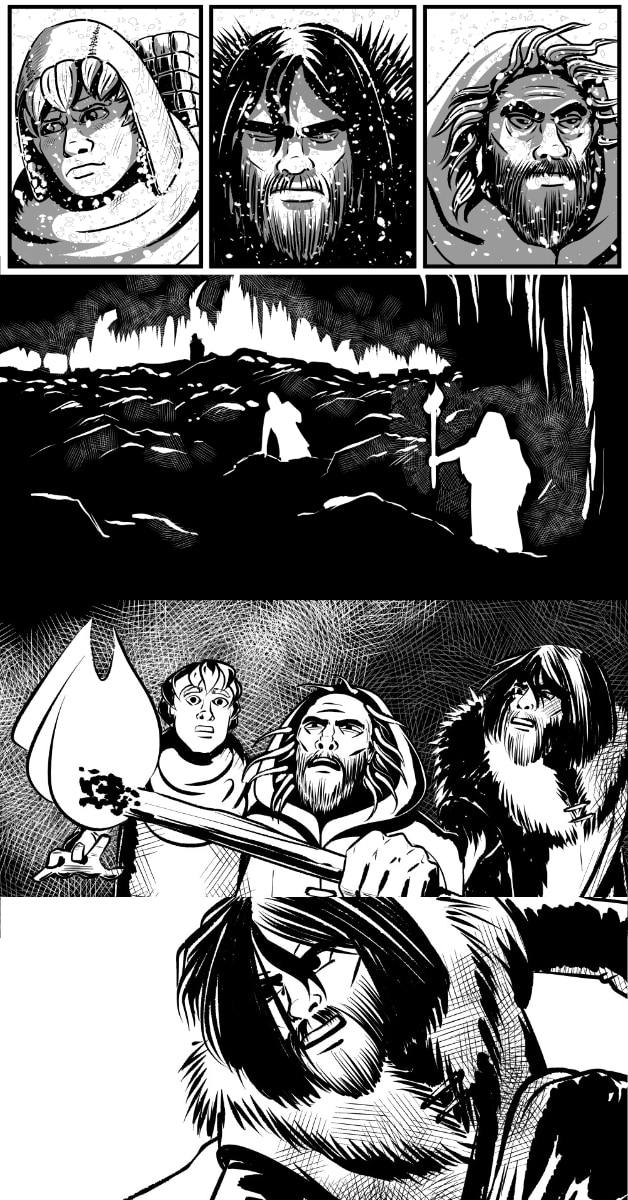
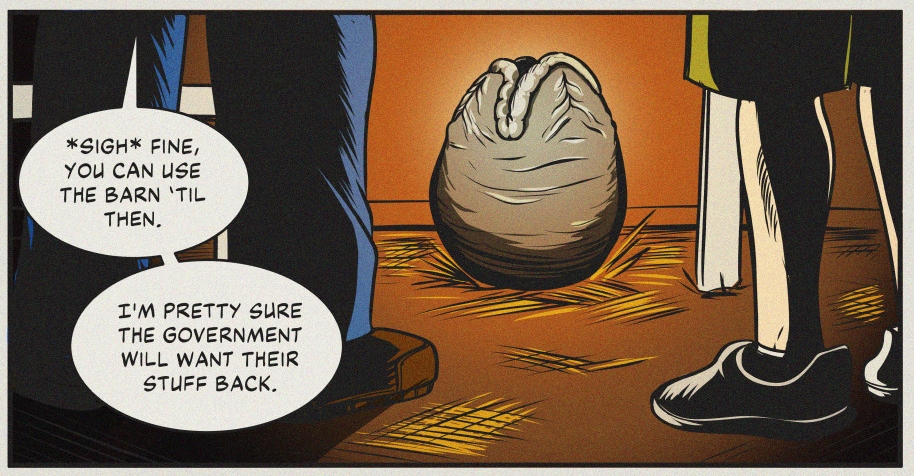
Today is Alien Day, a completely made-up observance of the ALIEN film franchise. In the spirit of the season, please enjoy this three-page fan comic "Finders Keepers" in which two men make a very foolish mistake. Written sometime last year with art banged out start to finish last week.
To be honest, this was all just an excuse to draw that final page.
Today’s newsletter crew got the final pages of HERETICAL: CHROME SANDS. The story wrapped up at 24 pages — not counting the cover. I kicked things off in mid-January, and by early April, it was done and dusted. Three months, start to finish.
For a little perspective: the first HERETICAL tale began as rough sketches back in 2015 and didn’t see the light of day until last December.
Also in today's newsletter: a three-page ALIEN fan comic about two guys who make a BIG mistake. "Finders Keepers" will be released on Alien Day 2025 this upcoming Saturday, but you can read it now — if you subscribe!
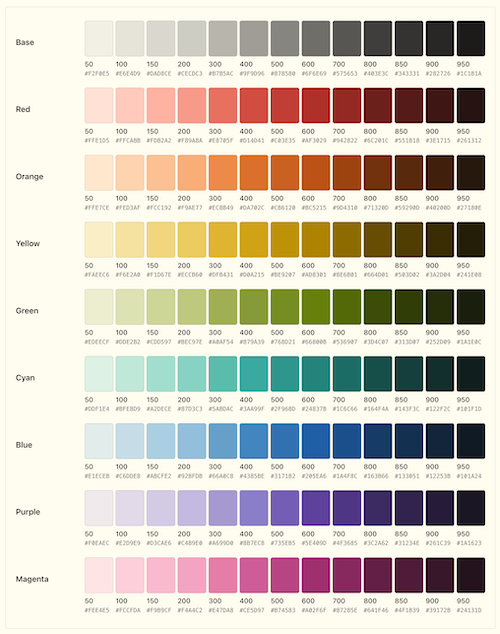
I came across Steph Ango's wonderful Flexoki color palette and fell for the warm, saturated colors that are meant to evoke ink on paper. Also, I immediately wanted to try it for webcomics.
This is sort of contrary to stated purpose of Flexoki, which is web typography and user interfaces. Still, I wanted to give the extended palette a try since I like working from a limited palette (I already spend too many indecisive moments farting around in color pickers) and the colors are specifically for the web. Which means all the standard caveats apply when using RGB colors for a future CMYK print job.
There are many ports for different applications, but none for Clip Studio Paint, so I grabbed the list of hex values and converted them into a CSP color set file. If you want to try it, download it below.
Note that the Flexoki "paper" and "black" colors should ideally be used as base (e.g. backround) colors. You won't get the same results with pure hex/RGB white and black (I've tried).
Why wait another eight years? The first ten pages of CHROME SANDS, the sequel to HERETICAL, is going out to Neat Hobby! newsletter subscribers next week! You can be one of them if you subscribe!
Otherwise you'll have to wait until all 24 pages are finished. Which is fine, but c'mon, aren't you curious?
The, uhm, polite and terse feedback on the previous post suggests to me that survivor bias and imposter syndrome are still robustly represented in the tech industry. Which is okay. This stuff is hard.
I've had some follow-up thoughts in draft mode for awhile, and given the Current State of the Industry it seems like good time to address a few common concerns.
"I don't feel comfortable asking these questions"
I think you'd be surprised at what interviewers can and are willing to share.
Remember, you're trying to start a conversation, not perform corporate espionage[1]. It's perfectly reasonable to want to know if you're going to be spending your time solving problems or putting out fires.
If you're worried about non-disclosure, just say that! "I'd like to hear a little bit about your tech stack, if that's permitted," or "if this topic is confidential, we can talk about something else." Any experienced interviewer should know where the line is.
That said, respect that line. Be interested, not nosy.
Oh, and if you're anxious that you'll offend your interviewer by asking these types of questions, let me just say you can't do any worse than candidates who ask softball questions or no questions at all.[2]
"I'm new. How can I ask these questions if I haven't experienced them myself?"
You don't need deep experience to have a conversation between peers, and you don't need to have solved any of these issues yourself. In fact, think twice before offering solutions. They should hire you for that!
By flipping the script, you're getting crucial insight into how the team or company operates. Just be sure you're actively listening and look for opportunities to ask follow-up questions. Maybe you've never had a job with an oncall rotation. Great! You're about to hear about what that's like here. Maybe you haven't had to gather requirements on your own. Awesome! You're about to hear how they do that here.
You're not doing anything different than your interviewers are by asking your own STAR-esque questions. You're just leaving out that "tell me about a time when—" part.
And if your interviewer does ask about your own experience, you can always say something like "I haven't experienced that situation yet myself, what's that like here?"
(All of that said, you should probably work on having opinions.)
"I don't think I can keep a conversation going"
Please don't be mad, but I don't believe it.
Why? Because you're in tech, and tech folk LOVE to talk tech! They have opinions. You've never debated the merits of some language or framework or Linux flavor with your classmates? You've never spent a team lunch discussing how to deal with some gnarly legacy code? Server vs. client-side? "ɡɪf" vs. "jɪf"?
One of my teams spent part of an afternoon talking about whether one should ever put comments in their code.
You can do this because you've already done this. Take advantage of this energy! Leverage the addictive properties of tech discourse!
Now you've found some common ground. You're no longer the candidate who crammed on sorting algorithms all weekend vs. the interviewer who hasn't thought about sorting since their own interview, and is preoccupied with why their deployment pipeline needs manual intervention several times a day. Now you're compatriots, fellow travelers — peers, even!
By asking questions that imply you're interested in discussing and solving problems, you're signaling that you're not just keen to get a job, but you're someone they should want to work with.
Be interested. Engage. Converse.
A super-secret stealth-mode startup might balk at answering in detail. But then, they may not have actually built anything significant yet (and if they have, it could be bootstrapped with hot glue and duct tape). ↩︎
And if you're around long enough, you're guaranteed to encounter folks that radiate some truly toxic vibes. Better to discover this now before you accept an offer. ↩︎
The third animated Neat Hobby! comic was an adaptation of "Sea Shanties for Modern Mariners" and wow I had to do a lot of work on this one. Not that it wasn't fun! I had a blast making it! But to make it a proper length video I had to add more sea creatures than the original comic had, which meant a total of ten different voices I had to come up with. And also a bunch of music, because it's a shanty!
And they're all singing! That's a lot of mouths to animate! When I was done I watched the final cut about one kabillion times, and then took a long break. Still my favorite of them all.
"Non-player Characters" is one of the most popular comics I've made and once I'd finished "Continuity I knew I was gonna animate it next. I had to do four voices, and you can tell by the dwarf's voice occupying an uncanny/horrifying spot between Inigo Montoya and Shrek that I'm not particularly skilled at accents. I made a joke at the time that I was trying to make the knight sound heroic like Superman, but ended sounding more like an imitation crab meat Space Ghost (RIP George Lowe).